—
## **The Cook’s Smart Trick: Start Peeling from the Wide End**
### **Always start peeling from the wide (air pocket) end of the egg.**
That’s it. But the *why* matters.
At the wide end of the egg is a small **air pocket** that forms naturally as the egg ages. Under that pocket:
* The membrane is looser
* There’s already separation between shell and white
* You can slip your finger or thumb under the membrane instead of tearing the egg
Once you catch the membrane cleanly, the shell often comes off in **large, satisfying sheets**.
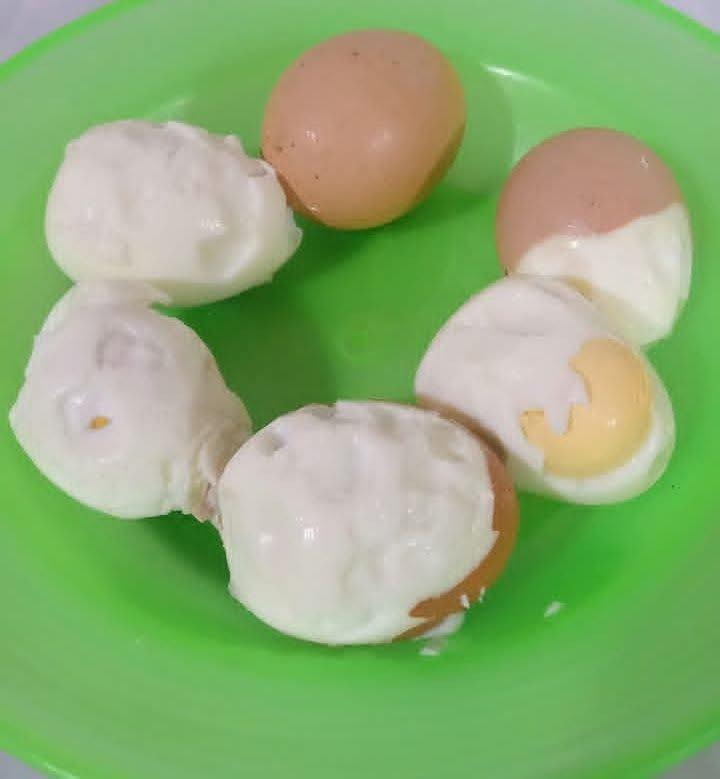
Many people peel randomly or from the pointed end—where the membrane is tightest. That’s where trouble starts.
—
## **The Full Foolproof Method (Step by Step)**
### **Step 1: Use Eggs That Aren’t Brand New**
If possible, use eggs that are **7–14 days old**. They don’t have to be old-old—just not laid yesterday.
—
### **Step 2: Start Eggs in Boiling Water (Not Cold)**
This is a game-changer.
Instead of placing eggs in cold water and bringing them to a boil, do this:
1. Bring water to a gentle boil first
2. Lower eggs in carefully with a spoon
* Heat sets the egg white quickly
* Whites pull away from the membrane instead of bonding to it
—
### **Step 3: Cook Gently, Not Aggressively**
A rolling boil can crack shells and create uneven cooking.
Aim for:
* Gentle boil or steady simmer
* 10–12 minutes for fully hard-boiled eggs
—
### **Step 4: Ice Bath Immediately**
When cooking time is up:
* Transfer eggs straight into **ice water**
* Let sit for at least **5–10 minutes**
This:
* Stops cooking
* Causes the egg to contract slightly
* Helps separate the white from the shell
—
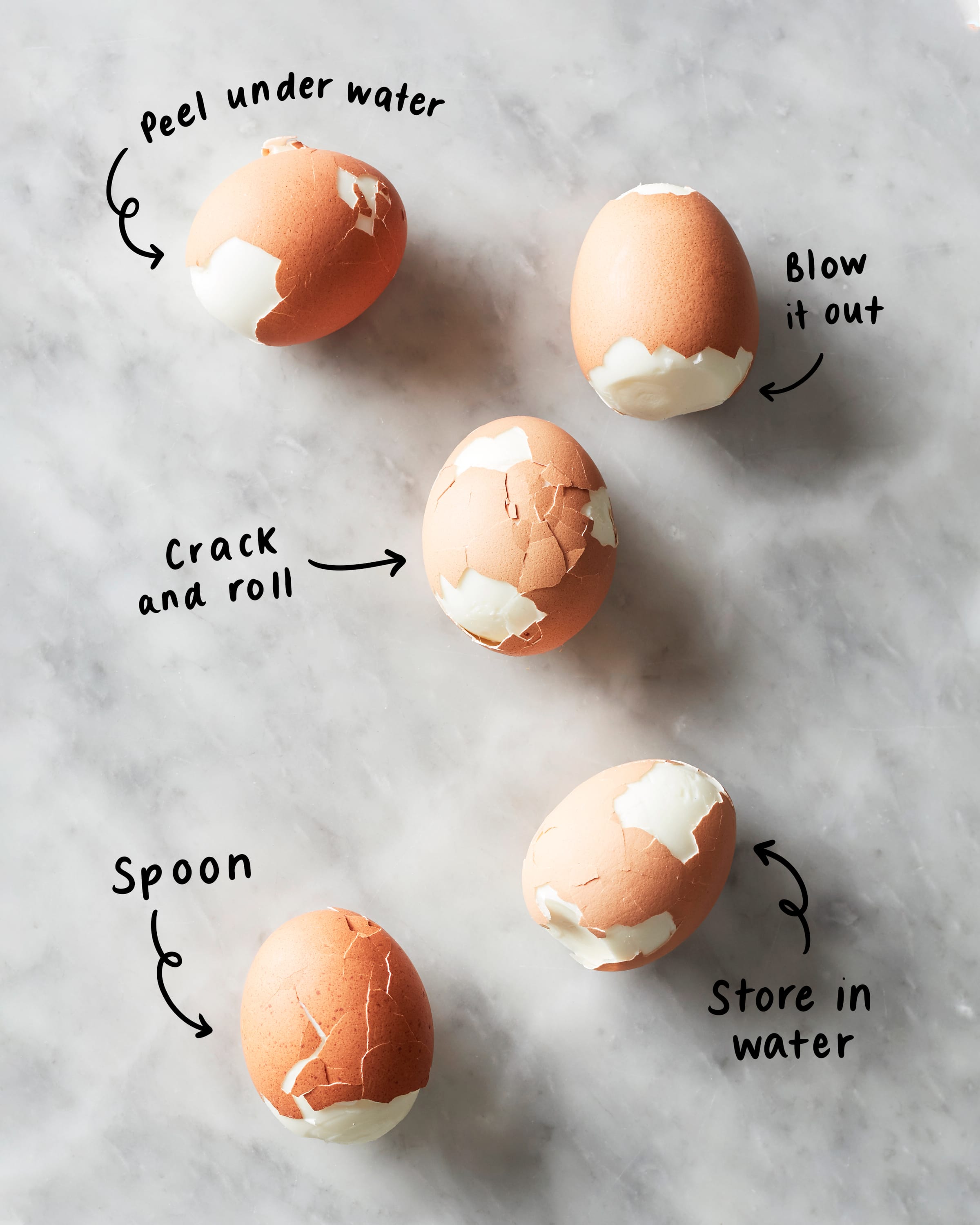
### **Step 5: Crack, Roll, and Start at the Wide End**
Now the magic.
1. Tap the wide end to crack the shell
2. Roll the egg gently to loosen the shell all around
3. Peel from the wide end, slipping under the membrane
Once you’re under that membrane, the rest often peels cleanly.

—
## **Why This Trick Works (The Science, Simplified)**
The air pocket is your secret weapon.
As eggs age:
* Moisture evaporates through the shell
* The air cell grows
* The membrane loosens
When you peel from the wide end:
* You’re attacking the egg at its weakest point
* You’re lifting the membrane, not tearing the white
* You’re working *with* the egg’s structure, not against it
Think of it like opening a bag from the perforated edge instead of ripping the middle.
—
## **Common Myths About Peeling Eggs (And Why They’re Hit or Miss)**
You’ve probably heard a million tips. Let’s sort fact from fiction.
### **“Add vinegar to the water”**
* Can help slightly by weakening shells
* Often doesn’t fix membrane sticking
* Doesn’t address the core problem
### **“Add salt to the water”**
* Mostly affects boiling point (very slightly)
* Doesn’t reliably improve peeling
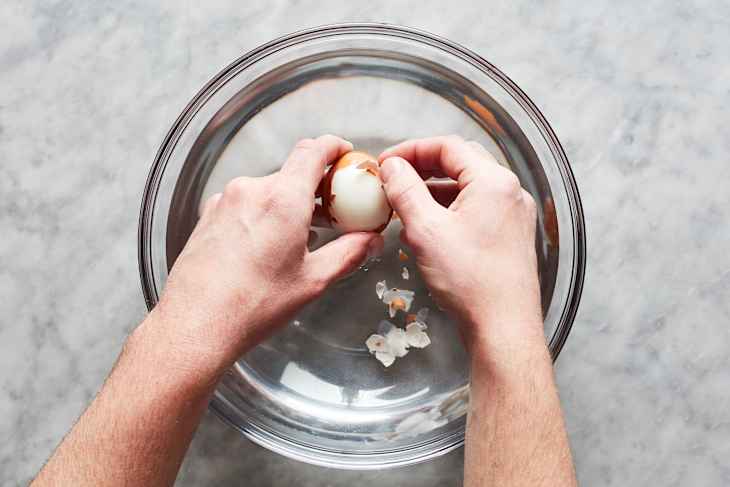
### **“Crack eggs under running water”**
* Water can help slide under the membrane
* Still works best when starting at the wide end
### **“Shake eggs in a jar”**
* Fast but risky
* Can damage the egg surface
* Better for batch peeling than perfection
These methods can help—but none matter if you don’t catch the membrane first.
—
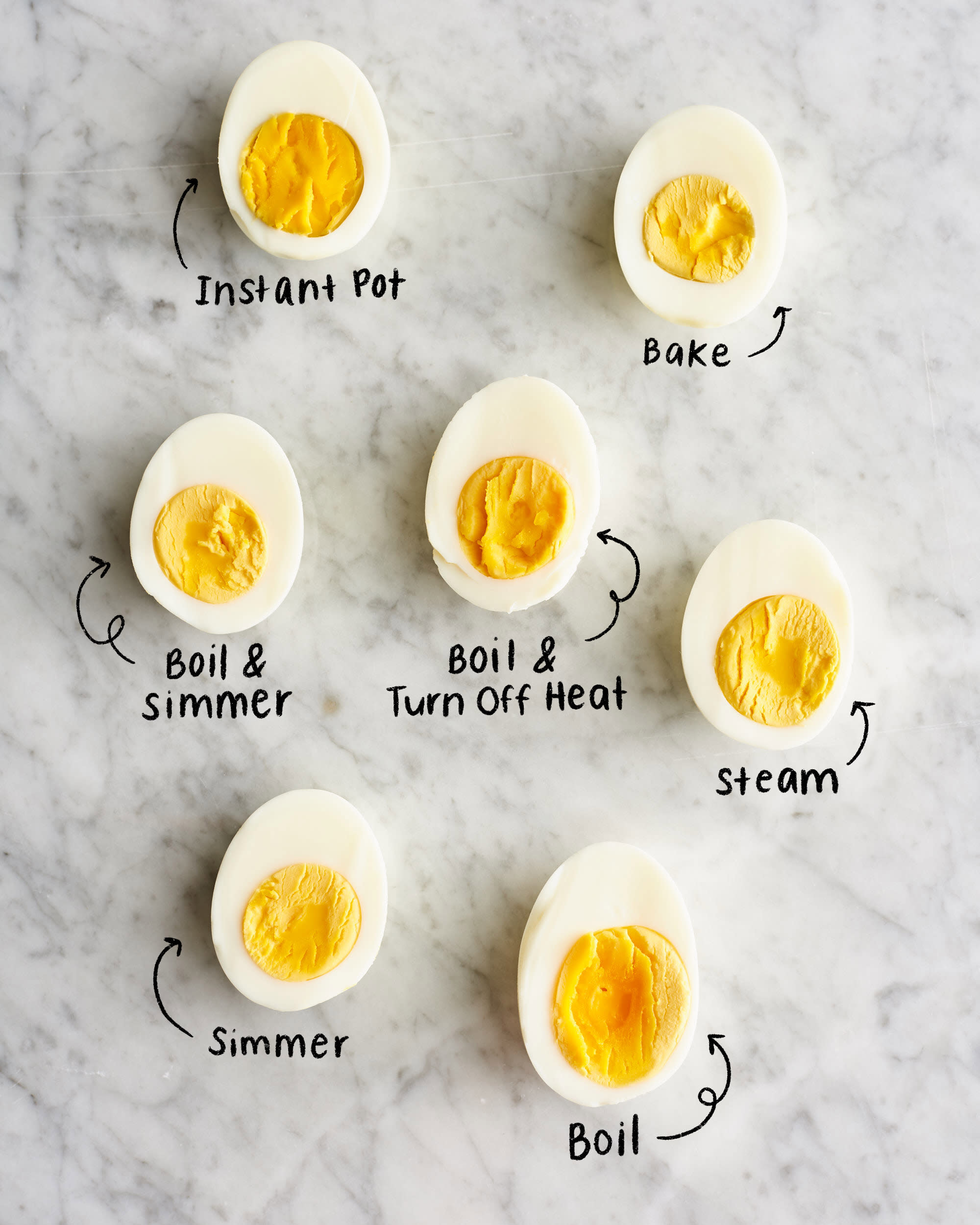
## **What About Steaming?**
Many cooks swear by steaming eggs instead of boiling—and they’re onto something.
Steaming:
* Heats eggs more quickly
* Sets whites faster
* Often results in easier peeling
If you steam eggs for **12–14 minutes** and still use the wide-end peeling trick, you get excellent results.
But even with steaming, **where you start peeling still matters**.
—
## **Why Some Eggs Peel Perfectly and Others Don’t**
Even with perfect technique, a few factors can still affect results:
* Egg freshness variability
* Shell thickness differences
* Storage conditions
* Cooking temperature inconsistencies
That’s not failure—it’s biology.
The goal isn’t perfection every time. It’s **dramatic improvement** every time.
—
## **Best Uses for Easy-Peel Eggs**
When eggs peel cleanly, they’re perfect for:
* Deviled eggs
* Egg salad
* Ramen toppings
* Salads (Cobb, Niçoise, potato)
* Meal prep
Presentation matters—and smooth eggs just taste better somehow.
—
## **Quick Troubleshooting Guide**
**Egg white tearing?**
→ You’re probably peeling from the wrong end or skipping the ice bath
**Shell sticking in tiny bits?**
→ Egg may be very fresh; use older eggs next time
**Rubbery whites?**
→ Overcooked; reduce boil intensity or time
**Green ring around yolk?**
→ Overcooked; shorten cooking or cool faster
—
## **The Takeaway**
The secret to easy-peel hard-boiled eggs isn’t fancy gadgets, special ingredients, or internet gimmicks.
It’s this:
* Start eggs in boiling water
* Cool them fast
* **Peel from the wide end where the air pocket lives**
That small shift turns egg peeling from a chore into one of those oddly satisfying kitchen moments.
Once you try it, you’ll never go back.
—
If you want, I can:
* Turn this into a **viral recipe post**
* Add a **printable quick guide**
* Rewrite it in **short-form social media style**
* Create a **“mistakes to avoid” version**
Just tell me what you’re cooking next 🥚✨
