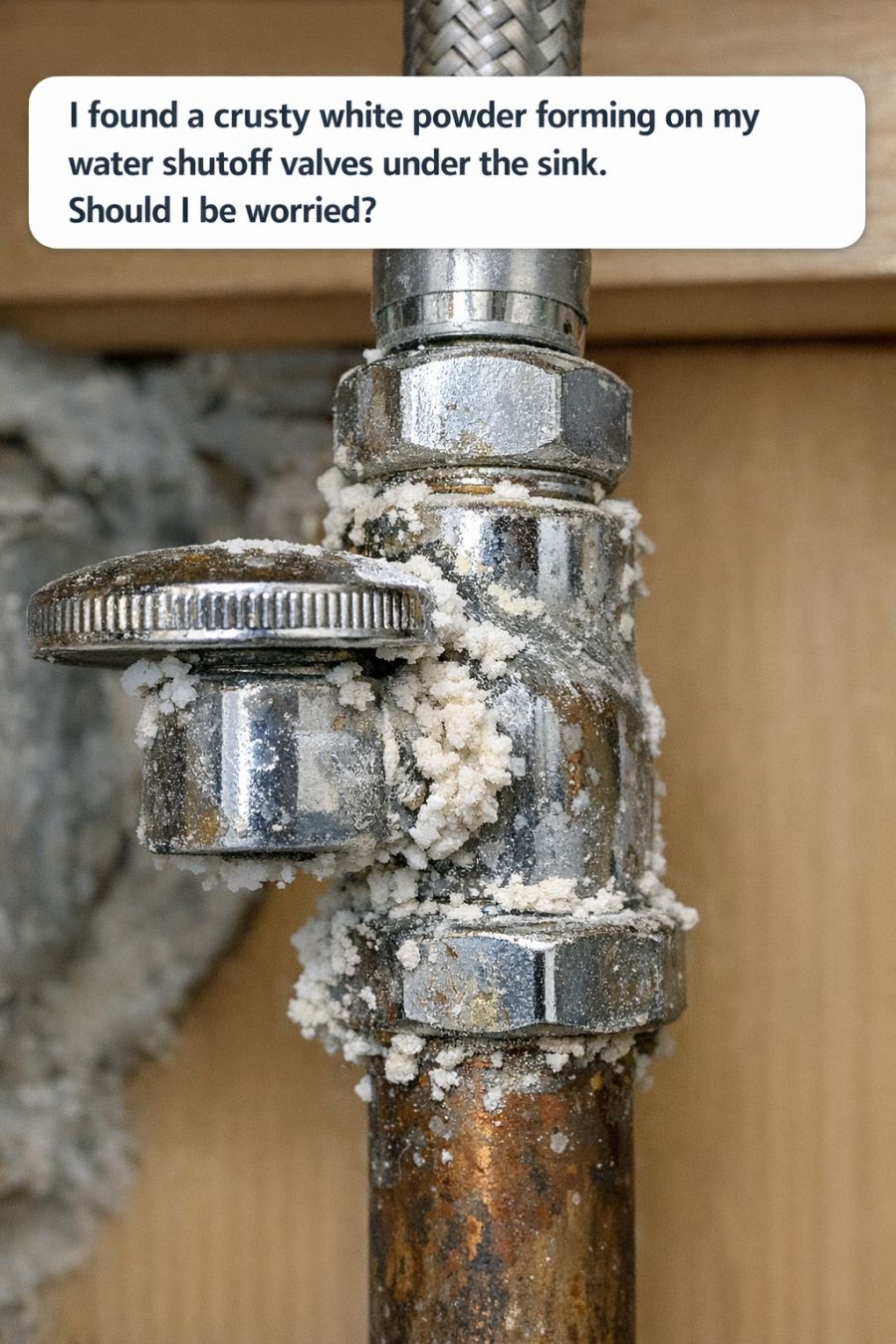
In most homes, the white powder found on water shutoff valves is one of the following:
1. **Mineral deposits (limescale)**
2. **Corrosion residue**
3. **Dried leakage from a slow seep**
4. **Efflorescence (less common indoors)**
—
## The Most Common Cause: Mineral Deposits (Limescale)
If you live in an area with **hard water**, this is almost certainly the culprit.
### What is hard water?
Hard water contains high levels of minerals, mainly:
* Calcium
* Magnesium
When water slowly evaporates—especially around joints, valves, or threads—it leaves those minerals behind as a **chalky white or off-white residue**.
### Why it shows up on shutoff valves
This buildup often looks:
* Powdery or crusty
* White or light gray
* Dry and flaky
In this case, the powder itself is **not harmful**, but it may point to a **very slow leak**.
—
## Another Common Cause: Corrosion on Metal Valves
If your shutoff valve is made of **brass, steel, or copper**, corrosion can also produce white residue.
### What’s happening?
### Signs it’s corrosion
* White or greenish residue
* Rough or pitted metal surface
* Valve looks dull or worn
Brass valves often develop **white zinc oxide**, while copper may produce bluish or green residue over time.
—
## Could It Be a Leak?
Yes—but not always an obvious one.
Many homeowners are surprised to learn that **microscopic leaks** can exist for years without dripping or puddling.
### Signs of a slow seep
* White powder concentrated around joints or threads
* Slight dampness if you touch the area
* Residue returning after cleaning
* No visible dripping
This type of seep isn’t an emergency, but it *can*:
* Weaken the valve over time
* Increase corrosion
* Eventually turn into a real leak
—
## Is It Mold or Something Dangerous?
Almost never.
White powder on metal plumbing is **very unlikely to be mold**. Mold usually:
* Grows on organic materials (wood, drywall)
* Looks fuzzy or spotty
* Thrives in consistently damp areas
Mineral buildup, by contrast:
* Is dry and chalky
* Does not spread on its own
* Doesn’t smell musty
If the area is dry and the substance wipes off as dust or flakes, it’s not mold.
—
## Is It Dangerous to My Health?
In normal household situations, **no**.
Calcium carbonate and mineral residue are not toxic. They’re the same minerals found in:
* Drinking water
* Chalk
* Limestone
The bigger concern isn’t health—it’s **plumbing longevity**.
—
## Why You Shouldn’t Ignore It Completely
While the white powder itself isn’t dangerous, it can signal **early plumbing wear**.
Left unaddressed, it can lead to:
* Valve corrosion
* Difficulty turning the shutoff in an emergency
* Eventual leaks or valve failure
* Water damage if the valve fails suddenly
Think of it as a **check engine light**, not a fire alarm.
—
## How to Check If There’s an Active Leak
Before panicking, do a simple inspection.
### Step 1: Dry the area
Use a paper towel or cloth and wipe everything clean.
### Step 2: Observe
Leave it alone for 24–48 hours.
### Step 3: Check again
* If it stays dry → likely old mineral residue
* If powder or moisture returns → slow seep
You can also gently wrap a dry paper towel around the joint and check it later for dampness.
—
## How to Safely Clean the White Powder
If the valve appears structurally sound, cleaning is fine.
### What you’ll need
* White vinegar
* Soft cloth or toothbrush
* Gloves (optional)
### How to clean
1. Dampen a cloth with vinegar
2. Gently wipe the residue
3. Let vinegar sit for stubborn buildup
4. Wipe dry completely
Avoid scraping aggressively—old valves can be fragile.
—
## When You Should Be Concerned
You should take action if you notice:
* Moisture returning consistently
* Cracks in the valve body
* Rust flakes or heavy corrosion
* The valve feels loose or fragile
* Difficulty turning the shutoff handle
In these cases, replacement is often better than repair.
—
## Should You Call a Plumber?
Not always—but sometimes, yes.
### Call a plumber if:
* The valve leaks after tightening
* Corrosion looks advanced
* The valve won’t turn
* You don’t know where your main shutoff is
* The valve is very old (20+ years)
A plumber can usually replace a shutoff valve quickly and prevent future issues.
—
## Can You Fix It Yourself?
If you’re comfortable with basic plumbing, **sometimes**.
Possible DIY fixes include:
* Gently tightening the packing nut
* Cleaning mineral buildup
* Replacing an accessible valve (if you can shut off water safely)
If the valve is brittle or heavily corroded, DIY attempts can make things worse.
—
## Why This Is More Common Than You Think
White buildup on shutoff valves is extremely common because:
* Valves aren’t often touched
* Small leaks go unnoticed
* Hard water accelerates deposits
* Valves live in dark, humid spaces
Many people only notice it years later—and that’s okay.
—
## How to Prevent It in the Future
While you can’t eliminate minerals entirely, you can reduce buildup.
### Prevention tips
* Periodically inspect shutoff valves
* Keep the area dry
* Address slow leaks early
* Consider a water softener in hard-water areas
* Turn shutoff valves once or twice a year to keep them functional
That last one is especially important—valves that never move tend to fail when needed most.
—
## What About the Main Water Shutoff?
If you see white powder on your **main shutoff valve**, take it more seriously.
That valve is critical in emergencies. If it fails:
* You may not be able to stop a major leak
* Water damage can escalate quickly
If the main shutoff shows corrosion or buildup, it’s worth a professional inspection.
—
## Final Verdict: Should You Be Worried?
**Concerned? Yes. Panicked? No.**
In most cases, crusty white powder on water shutoff valves is:
* A sign of mineral deposits
* Possibly a very slow seep
* Not dangerous on its own
But it *is* a reminder to:
* Inspect your plumbing
* Address minor issues early
* Ensure your shutoff valves work when you need them
A few minutes of attention now can prevent expensive repairs later.
—
## Final Thoughts
Home maintenance often reveals small, unexpected surprises—and most of them aren’t disasters. That crusty white powder is your home quietly saying, *“Keep an eye on this.”*
Listen early, act calmly, and you’ll stay ahead of the problem.
—
If you’d like, I can:
* Rewrite this in a **more casual or viral tone**
* Add **photos or diagrams suggestions**
* Create a **short checklist version**
* Optimize it for **SEO or home-improvement blogs**
Just tell me what you’d like next.
