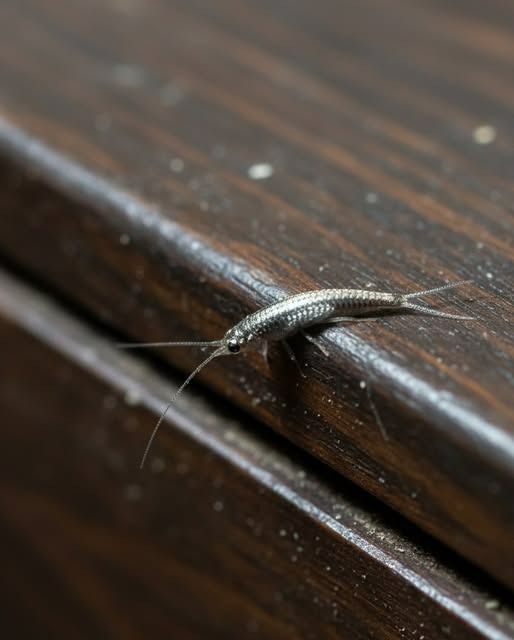
* Length: about ½ to 1 inch
* Color: silver, gray, or metallic blue
* Shape: carrot-like body with tapered ends
* Movement: fast, zigzagging, and slippery
* Activity: nocturnal (most active at night)
They have three long bristles extending from the back of their bodies and two long antennae in front, giving them a slightly alien appearance.
—
## Why Are Silverfish in Your Home?
Silverfish don’t randomly wander into houses. If you’re seeing them, your home is offering something they need to survive.
### The Big Clue: Moisture 💧
Silverfish thrive in **damp, humid environments**. They absorb moisture from the air and dehydrate quickly in dry conditions.
Common silverfish hotspots include:
* Bathrooms
* Kitchens
* Basements
* Laundry rooms
* Attics with poor ventilation
If silverfish are present, it often indicates **excess humidity or moisture problems**, such as:
In other words, silverfish can act as **living humidity detectors**.
—
## What Does It Mean If You Find Silverfish in Your Home?
Finding a silverfish isn’t just about the insect itself—it’s about what your home environment is telling you.
### 1. Your Home May Have Hidden Moisture Issues
Silverfish require high humidity levels (usually above 75%) to survive. If they’re living comfortably in your home, there may be:
* Moisture behind walls
* Damp insulation
* Hidden leaks
* Inadequate airflow
### 2. There’s a Readily Available Food Source
Silverfish aren’t picky eaters. They feed on carbohydrates and proteins found in everyday household items, including:
* Paper and books
* Cardboard boxes
* Wallpaper glue
* Fabrics (especially cotton and linen)
* Pantry items like flour, cereal, and sugar
* Dead insects and skin flakes
If silverfish are present, it often means **something in your home is serving as an all-you-can-eat buffet**.
—
## Are Silverfish Dangerous?
The good news: **silverfish are not harmful to humans directly**.
They:
* Do not bite or sting
* Do not transmit diseases
* Are not poisonous
However, that doesn’t mean they’re harmless.
### The Real Risks of Silverfish
Silverfish can cause:
* Damage to books, documents, and photos
* Holes in clothing, curtains, and upholstery
* Contamination of dry food products
* Damage to wallpaper and adhesives
Over time, a silverfish infestation can quietly destroy valuable or sentimental items—especially in storage areas where damage may go unnoticed.
—
## One Silverfish vs. an Infestation
Seeing a single silverfish doesn’t always mean you have a full-blown infestation, but it **shouldn’t be ignored**.
### Signs You May Have More Than One:
* Seeing silverfish regularly, especially at night
* Finding small holes in paper or fabric
* Yellowish stains or shed skins
* Spotting them in multiple rooms
Silverfish reproduce slowly compared to other pests, but they live long lives—sometimes up to **eight years**—giving them plenty of time to cause damage.
—
## Why Silverfish Love Bathrooms and Kitchens
Bathrooms and kitchens are silverfish paradise for three main reasons:
1. **High humidity** from showers, sinks, and cooking
2. **Dark hiding places** like cabinets and drains
3. **Easy access to food sources**
This is why they often appear at night when lights are turned on suddenly—bright light drives them to flee back into cracks and crevices.
—
## How to Get Rid of Silverfish (and Keep Them Away)
Eliminating silverfish isn’t just about killing the insects—it’s about **changing the conditions that attract them**.
### 1. Reduce Humidity
This is the most important step.
* Use dehumidifiers in damp areas
* Run bathroom and kitchen exhaust fans
* Fix leaky pipes and faucets
* Improve ventilation in basements and attics
Silverfish cannot survive in dry environments.
—
### 2. Eliminate Food Sources
* Store pantry items in airtight containers
* Declutter paper piles and cardboard boxes
* Vacuum regularly, especially along baseboards
* Store books and clothing in sealed containers
The less they have to eat, the less likely they are to stay.
—
### 3. Seal Entry Points
Silverfish hide in cracks and crevices.
* Seal gaps around baseboards and doors
* Caulk cracks in walls and around pipes
* Repair damaged wallpaper
This reduces hiding spots and breeding areas.
—
### 4. Use Targeted Treatments
For persistent problems, consider:
* Sticky traps to monitor activity
* Diatomaceous earth (food-grade) in cracks
* Boric acid (used carefully and safely)
In severe cases, professional pest control may be necessary—especially if moisture issues are widespread.
—
## A Warning Sign You Shouldn’t Ignore
Silverfish are often seen as a minor nuisance, but their presence can be a **red flag** for deeper household issues.
They may indicate:
* Chronic humidity problems
* Poor ventilation
* Hidden water damage
* Increased risk of mold
Addressing silverfish early can prevent far more expensive repairs down the line.
—
## Why You’re Seeing Them More Often
Many homeowners report seeing silverfish more frequently due to:
* Increased indoor humidity
* Energy-efficient homes with reduced airflow
* Climate changes creating wetter conditions
* More stored paper and cardboard in modern homes
As homes become more airtight, moisture control becomes more important than ever.
—
## Final Thoughts: Don’t Panic—Pay Attention
Finding a silverfish in your home isn’t a reason to panic, but it **is a reason to investigate**.
Think of silverfish as a warning light on your dashboard. The insect itself isn’t the main problem—the environment allowing it to thrive is.
By addressing moisture, improving ventilation, and reducing clutter, you can not only get rid of silverfish but also create a healthier, more resilient living space.
So the next time you spot that silvery flash on your bathroom floor, don’t just squash it and move on. Ask yourself: *What is my home trying to tell me?*
—
If you want, I can:
* Rewrite this for **viral click-style blogs**
* Add **SEO keywords and meta descriptions**
* Create a **shorter version for social media**
* Adapt it for **home improvement or pest-control websites**
Just say the word 🐜💧
