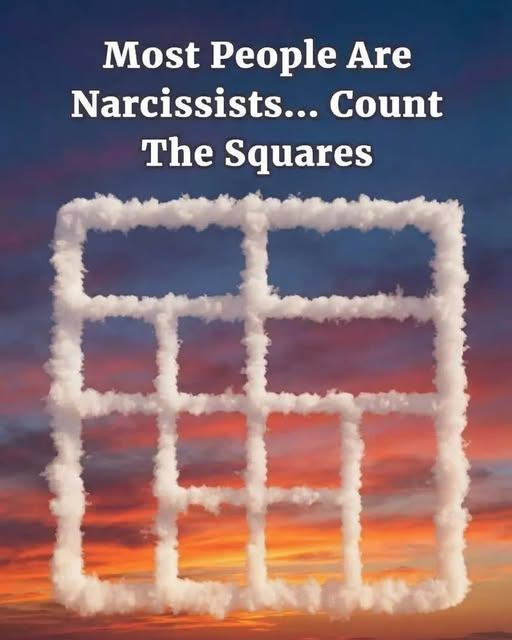
At its core, the Square Challenge is deceptively simple. A digital image is shared, typically featuring a grid of shapes, lines, or dots arranged in a way that forms **a hidden square**. The challenge is to identify the square as quickly as possible.
The twist is that the square isn’t obvious. It may be camouflaged among circles, diamonds, or irregular shapes. Sometimes, the square is defined not by lines but by the **negative space between objects**. This forces the viewer to mentally group patterns, focus attention, and distinguish figure from background.
—
## Why It Goes Viral
Several factors contribute to the Square Challenge’s viral nature:
1. **Accessibility** – Anyone can try it. It doesn’t require special knowledge, only observation.
2. **Shareability** – People love tagging friends, boasting about who found the square fastest, or teasing others who struggle.
3. **Frustration and Reward** – The challenge creates a small cognitive struggle. The moment someone identifies the square, they experience a burst of satisfaction. This “aha moment” is addictive.
4. **Social Proof** – As friends post their times or screenshots, others feel compelled to join. Nobody wants to be the last to figure it out.
The combination of **simplicity, difficulty, and social engagement** explains why it spreads like wildfire on platforms like TikTok, Instagram, and Twitter.
—
## What the Challenge Reveals About Human Perception
While fun, the Square Challenge also demonstrates **key principles of perception**. Here are some of the most fascinating lessons it offers:
One of the first things participants notice is that some people spot the square immediately while others stare for minutes. Why does this happen?
Human perception is shaped by prior experience, attention, and even mood. Two people looking at the same image can see different things because:
* Their brains focus on different areas first
* They interpret patterns differently
* Past experiences influence what “pops out” visually
This aligns with a principle in psychology known as **gestalt perception**, which explains how we naturally organize visual elements into patterns and whole forms. People trained to spot symmetry or geometry may recognize the hidden square faster than someone focusing on color or texture.
—
### 2. Our Brains Prefer Familiar Patterns
When confronted with complex or ambiguous visuals, the brain automatically searches for familiar shapes or structures. In the Square Challenge, many participants initially ignore the square because their attention is drawn to circles, triangles, or other dominant patterns in the image.
The challenge illustrates a paradox: our brains are excellent pattern detectors, yet that very strength can prevent us from seeing what’s right in front of us.
—
### 3. Attention and Focus Matter More Than Intelligence
Many people assume that difficulty in the Square Challenge reflects intelligence—but it doesn’t. Solving it is less about IQ and more about **attentional control**.
Participants who can:
* Step back mentally
* Resist fixating on irrelevant details
* Adjust their perspective
…often find the square quickly. This explains why some individuals can solve the puzzle almost instantly, while others struggle for minutes despite equal intelligence.
In other words, the challenge is as much about **how we look at things** as **what we know**.
—
### 4. The Power of Negative Space
One reason the Square Challenge is so tricky is that the square is sometimes formed by **the space between other shapes rather than lines themselves**.
This forces the brain to:
* Switch from object-based to space-based perception
* Recognize shapes not explicitly drawn
* Understand that absence can create presence
Negative space is a critical concept in art, design, and architecture. The Square Challenge demonstrates how humans are wired to detect edges and boundaries—but also how easily those edges can be camouflaged.
—
### 5. The Role of Frustration and Reward
Psychologists explain why people can spend 10 minutes staring at a simple shape without giving up. It’s the **interplay between frustration and reward**.
* **Frustration** triggers tension and focus
* **Discovery** triggers dopamine release and satisfaction
This is the same neurological mechanism that makes escape rooms, puzzle games, and even viral TikTok challenges so addictive. The Square Challenge taps into a **fundamental pleasure of problem-solving**, which helps explain its viral potential.
—
## Lessons Beyond the Puzzle
Beyond being a viral distraction, the Square Challenge offers broader insights about perception and cognition that apply to life beyond puzzles:
### 1. Perspective Changes Everything
Sometimes, taking a step back—or changing the way you look at a problem—reveals solutions immediately. The Square Challenge is a metaphor for real-world problem-solving: **what seems invisible from one angle becomes obvious from another**.
### 2. Don’t Trust First Impressions
Our initial perceptions are often biased or incomplete. In the challenge, the square may be overlooked initially, reminding us that **first impressions can be misleading**, whether in visual puzzles, relationships, or complex decisions.
### 3. Everyone Sees the World Differently
The fact that some people find the square in seconds while others struggle underscores the subjective nature of perception. It reminds us to **be patient and empathetic**, recognizing that differences in perspective are natural.
### 4. Attention and Patience Are Skills
The Square Challenge is a test of attention, patience, and adaptability—skills that are valuable in work, education, and daily life. Those who learn to calm frustration and shift focus are more likely to succeed.
—
## Why the Challenge Resonates Across Generations
The Square Challenge isn’t just a millennial or Gen Z phenomenon. Its appeal spans ages because it taps into **universal cognitive experiences**:
* The thrill of sudden discovery
* The frustration of being “tricked” by perception
* The social satisfaction of sharing results with friends
Unlike complex online games, it doesn’t require expensive technology, prior knowledge, or time-consuming commitment. That universality makes it both approachable and widely shareable.
—
## The Role of Social Media
Social media has amplified the Square Challenge in unique ways:
* **Competition** – Users time themselves and challenge friends
* **Virality** – Screenshots and videos make sharing instantaneous
* **Collective Problem-Solving** – Comments often contain hints or solutions
* **Meme Culture** – The frustration and surprise generated by the puzzle make it a natural source for humor and relatability
This social aspect creates a feedback loop: the more people see others struggling or succeeding, the more compelled they are to try it themselves.
—
## What Educators and Psychologists Can Learn
The Square Challenge isn’t just entertainment—it’s also a learning tool. Educators, cognitive scientists, and psychologists can use such visual puzzles to study:
* Pattern recognition skills
* Attention span and cognitive flexibility
* Problem-solving strategies
* Responses to frustration and reward
It provides a simple, measurable way to explore how humans process visual information—and why people differ in their ability to detect patterns.
—
## Beyond the Square: Implications for Daily Life
Ultimately, the viral Square Challenge is a reminder that **perception is complex, subjective, and malleable**. In life, just like in the challenge:
* Things are not always as obvious as they seem
* Initial confusion doesn’t mean failure
* Taking a step back or changing perspective can reveal solutions
* Persistence and patience are often rewarded
* Social learning and collaboration improve outcomes
These lessons extend far beyond a viral puzzle—they speak to work, relationships, and problem-solving in general.
—
## Conclusion
The Square Challenge may appear at first glance to be just a viral game, but it is more than that. It is a window into the human mind, offering insights about perception, attention, and cognition. It reminds us that what we see is filtered through experience, focus, and bias—and that sometimes, patience and perspective are the keys to discovery.
As social media continues to create viral puzzles and challenges, the Square Challenge stands out for its simplicity, universality, and the surprising depth of lessons it offers. It proves that even a seemingly trivial trend can teach us something profound about the way we see and interpret the world.
So next time you find yourself stuck on a visual puzzle—or even a real-life problem—remember: the square may be right in front of you, and all it takes is a shift in perspective to see it.
—
If you want, I can also create a **visual guide with examples of the Square Challenge** and **interactive tips for solving it**, which would make this blog even more engaging and shareable.
Do you want me to make that next?
