Stroke warning signs weeks in advance are frequently overlooked because they:
* Come and go quickly
* Mimic less serious conditions
* Don’t cause pain
* Appear unrelated or random
* Happen during stressful or busy periods
* “It was just fatigue.”
* “I stood up too fast.”
* “I’m just getting older.”
* “It went away, so it’s fine.”
Unfortunately, **the brain remembers what the mind tries to forget**.
—
## **1. Sudden Vision Changes**
One of the earliest warning signs of a stroke can involve the eyes.
Possible symptoms include:
* Blurred vision in one or both eyes
* Temporary loss of vision (especially in one eye)
* Seeing double
* Difficulty focusing
These changes may last only minutes and then resolve — which is exactly why they’re dismissed.
If vision changes happen suddenly, even if they disappear, they deserve immediate medical attention.
—
## **2. Unexplained Dizziness or Loss of Balance**
Feeling dizzy once in a while isn’t unusual. But **sudden, unexplained dizziness** — especially when paired with other symptoms — can be a red flag.
Watch for:
* Trouble walking
* Loss of coordination
* Feeling like the room is spinning
* Sudden clumsiness or falls
These symptoms may indicate that the part of the brain responsible for balance and coordination isn’t receiving enough blood.
—
## **3. Brief Episodes of Numbness or Weakness**
One of the most well-known stroke symptoms can also appear weeks in advance — but only briefly.
Early warning signs may include:
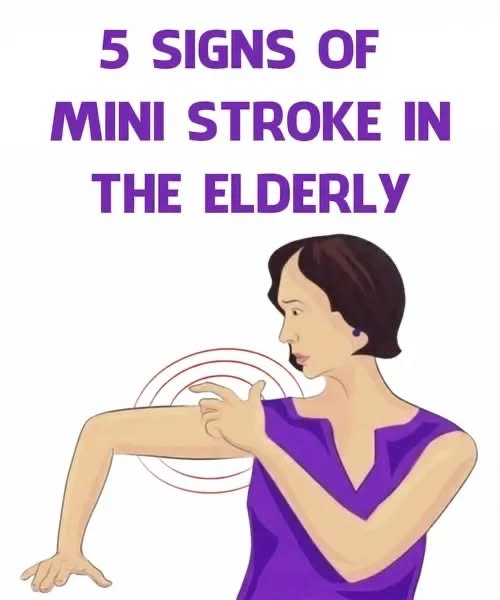
* Numbness or tingling in the face, arm, or leg
* Weakness on one side of the body
* A heavy or “dead” feeling in a limb
These sensations may last minutes or hours and then disappear completely.
That doesn’t mean they were harmless.
Temporary weakness or numbness is often linked to **TIAs**, which dramatically increase stroke risk in the near future.
—
## **4. Difficulty Speaking or Understanding Words**
Language problems are another symptom that may come and go before a stroke.
This can look like:
* Trouble finding words
* Slurred speech
* Speaking clearly but not making sense
* Difficulty understanding what others are saying
People often brush this off as stress, fatigue, or anxiety — especially if it resolves quickly.
But the brain’s language centers are extremely sensitive to changes in blood flow. Even brief disruptions can signal danger ahead.
—
## **5. Sudden, Unusual Headaches**
Not all headaches are created equal.
A warning sign may be:
* A sudden, severe headache with no known cause
* A headache that feels different from your usual ones
* A headache accompanied by vision issues, confusion, or weakness
While headaches alone don’t always indicate a stroke, **a dramatic change in headache pattern** can be a signal that something serious is happening in the brain.
—
## **6. Confusion or Mental Fog**
Subtle cognitive changes can be among the earliest and easiest signs to miss.
These may include:
* Difficulty concentrating
* Sudden confusion
* Memory lapses
* Feeling mentally “foggy” or detached
Friends or family may notice changes before the person experiencing them does.
Any sudden change in mental clarity — especially if it’s unusual for you — deserves attention.
—
## **7. Extreme Fatigue With No Clear Cause**
Unusual, overwhelming fatigue can appear weeks before a stroke, particularly in women.
This isn’t typical tiredness — it’s:
* Sudden
* Debilitating
* Out of proportion to activity level
Fatigue alone isn’t diagnostic, but when combined with other symptoms, it can be part of a larger warning pattern.
—
## **The Role of Transient Ischemic Attacks (TIAs)**
A TIA is often described as a “warning stroke.”
Symptoms mirror those of a full stroke but resolve within minutes or hours. The danger lies in the false reassurance that comes when symptoms disappear.
Statistics show that:
* The risk of stroke is highest in the days and weeks following a TIA
* Many major strokes are preceded by at least one TIA
A TIA is not a “close call.”
It’s a **medical emergency**.
—
## **Who Is at Higher Risk?**
Stroke can happen to anyone, but risk increases with:
* High blood pressure
* Diabetes
* High cholesterol
* Smoking
* Obesity
* Heart disease
* Family history of stroke
* Sedentary lifestyle
* Chronic stress
Age increases risk, but strokes **do not only affect the elderly**. Younger adults are increasingly experiencing strokes — often with warning signs that go unrecognized.
—
## **What To Do If You Notice These Symptoms**
If you experience **any sudden neurological symptoms**, even if they resolve:
1. **Do not ignore them**
2. **Seek medical attention immediately**
3. **Tell your provider exactly what happened and when**
4. **Do not wait to “see if it happens again”**
If symptoms are happening *right now*, call emergency services immediately.
Remember the FAST acronym for stroke emergencies:
* **F**ace drooping
* **A**rm weakness
* **S**peech difficulty
* **T**ime to call for help
Time lost is brain lost.
—
## **Listening to Your Body Can Save Your Life**
Your body is constantly communicating. Sometimes it whispers before it screams.
Early stroke symptoms are often quiet, confusing, and easy to explain away — but they are among the most important warnings you’ll ever receive.
You don’t need to panic.
But you do need to pay attention.
Trust your instincts.
Advocate for yourself.
And never feel embarrassed for taking symptoms seriously.
When it comes to stroke, **early action saves lives — including your own**.
—
### **Important Note**
This article is for educational purposes only and is not a substitute for professional medical advice. If you or someone else experiences stroke symptoms, seek emergency medical care immediately.
—
If you’d like, I can:
* Adapt this for **women’s health**, **seniors**, or **caregivers**
* Shorten it for **news or social media**
* Add **expert quotes or statistics**
* Optimize it further for **SEO**
Just tell me how you’d like to use it.
