### 2. Lips or Mouth Corners
Often linked to saliva, dryness, or skin irritation.
Typically dried mucus or nasal discharge.
### 4. Skin Wounds or Rashes
Dried serum from healing or inflamed skin.
Each location tells a slightly different story.
—
## Yellow Crust in the Eyes: What It Usually Means
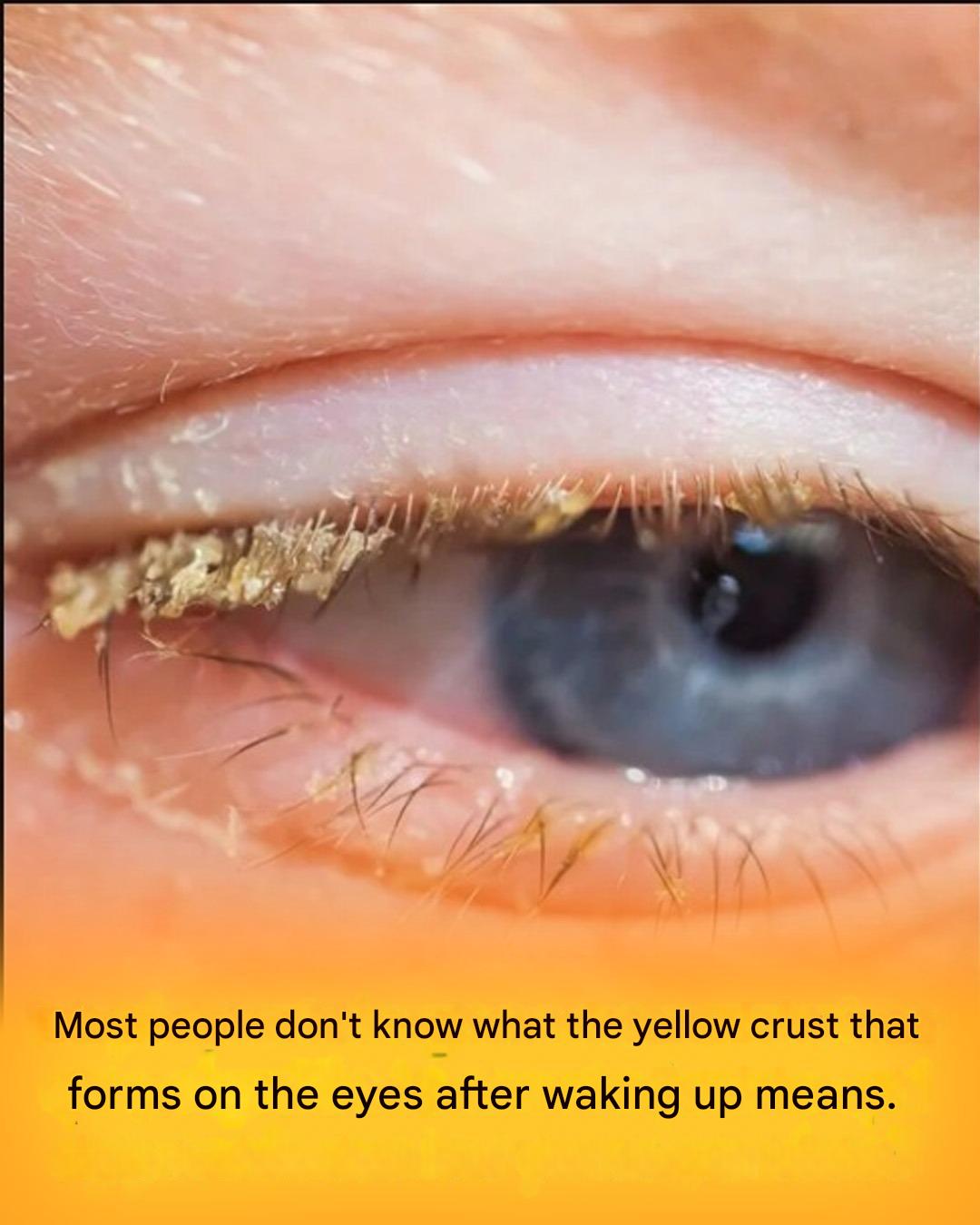
### Normal Eye Discharge (Sleep Crust)
A small amount of eye crust—sometimes called “sleep” or “eye boogers”—is completely normal. During the day, blinking washes away debris. At night, it accumulates.
* Small amounts
* Pale yellow or off-white color
* Easily wiped away
* No pain or redness
This usually isn’t a cause for concern.
—
### Conjunctivitis (Pink Eye)
When yellow crust is **thick, sticky, or excessive**, it may point to conjunctivitis.
**Possible signs:**
* Eyes stuck shut in the morning
* Redness
* Itching or burning
* Continuous discharge during the day
—
### Blepharitis (Eyelid Inflammation)
Blepharitis occurs when the oil glands at the base of the eyelashes become irritated or blocked.
**Common symptoms:**
* Yellow or greasy crust along the lash line
* Red, swollen eyelids
* Itchy or burning sensation
* Flaky skin around the eyes
This condition is common and often chronic but manageable with proper eyelid hygiene.
—
### Dry Eye Syndrome
Ironically, dry eyes can cause crusting.
When tears evaporate too quickly or lack proper oil balance, the eyes may overproduce mucus to compensate—leading to crust formation overnight.
—
## Yellow Crust Around the Mouth or Lips
### Dried Saliva and Dehydration
If you sleep with your mouth open, saliva can pool and dry at the corners of your lips.
This is more likely if you:
* Are dehydrated
* Have nasal congestion
* Breathe through your mouth at night
The crust may appear yellow due to enzymes in saliva reacting with skin oils.
—
### Angular Cheilitis
This is a common condition affecting the corners of the mouth.
**Signs include:**
* Cracks or redness at the mouth corners
* Yellow crusting or oozing
* Tenderness or burning
It can be caused by moisture buildup, fungal or bacterial overgrowth, or nutritional deficiencies.
—
### Cold Sores or Skin Irritation
Healing cold sores or irritated skin can ooze fluid that dries into a yellow crust. This is part of the healing process but should be monitored for signs of infection.
—
## Yellow Crust in or Around the Nose
### Dried Nasal Mucus
This is extremely common, especially if:
* The air is dry
* You have allergies
* You’re recovering from a cold
* You sleep with a fan or heater on
Mucus naturally traps particles and pathogens. When it dries, it can form yellow crusts around the nostrils.
—
### Sinus or Nasal Infections
If nasal crusting is accompanied by:
* Thick yellow or green mucus
* Facial pressure
* Congestion
* Headache
…it may indicate a sinus infection or prolonged inflammation.
—
## Yellow Crust on Skin or Wounds
### Healing Process
When skin is healing from a cut, rash, or acne lesion, it may release a clear or slightly yellow fluid called **serum**. When this dries, it forms a crust.
This is often normal—but only if:
* The area isn’t increasingly red or painful
* There’s no spreading swelling
* The crust is temporary
—
### Impetigo
Impetigo is a contagious bacterial skin infection, most common in children but possible at any age.
**Classic signs include:**
* Honey-colored yellow crusts
* Red sores or blisters
* Rapid spread
This requires medical treatment.
—
## Why Yellow Specifically?
The yellow color often comes from:
* White blood cells fighting irritation or bacteria
* Natural oils oxidizing
* Dried serum
* Bacterial byproducts
Yellow doesn’t automatically mean “dangerous,” but **persistent or worsening yellow crust** deserves attention.
—
## When Yellow Crust Is Likely Harmless
In most cases, yellow crust upon waking is harmless if:
* It appears occasionally
* There’s no pain, swelling, or redness
* It clears with gentle cleaning
* There are no other symptoms
Your body produces waste and protective fluids constantly. Overnight buildup is normal.
—
## When You Should Pay Attention
Consider seeking medical advice if the crust:
* Returns daily and worsens
* Is thick, foul-smelling, or excessive
* Comes with pain, fever, or swelling
* Causes vision changes (for eye crust)
* Spreads or doesn’t heal
Persistent crusting is your body’s way of saying something needs addressing.
—
## How to Gently Manage Yellow Crust at Home
### For Eyes:
* Use a warm, clean compress
* Gently wipe with a damp cloth
* Avoid rubbing
* Keep hands clean
### For Lips and Mouth:
* Stay hydrated
* Use a gentle lip balm
* Keep the area dry overnight
### For Nose:
* Use a humidifier
* Apply a small amount of petroleum jelly externally
* Rinse with saline if congested
### For Skin:
* Clean gently with mild soap
* Avoid picking at crusts
* Keep the area dry and clean
Never aggressively scrape or peel crusts, as this can worsen irritation or introduce infection.
—
## Lifestyle Factors That Can Contribute
Yellow crusting can be influenced by:
* Poor sleep quality
* Dehydration
* Allergies
* Dry indoor air
* Stress and immune changes
* Skin conditions like eczema or rosacea
Addressing these underlying factors often reduces recurrence.
—
## What Yellow Crust Is NOT
It’s important to clear up some misconceptions.
Yellow crust is not automatically:
* A sign of poor hygiene
* A serious disease
* A reason to panic
* Always contagious
Context matters more than color alone.
—
## Final Thoughts: Listen to Patterns, Not Panic
Yellow crust upon waking is usually your body doing what it does best—**protecting, cleaning, and healing**. Most of the time, it’s minor and temporary.
The key is paying attention to:
* Frequency
* Location
* Associated symptoms
* Changes over time
If it’s occasional and painless, gentle care is often all that’s needed. If it’s persistent or uncomfortable, professional guidance can help identify the cause quickly and effectively.
Your body communicates in small signals. Yellow crust is one of them—not a warning siren, but a message worth understanding.
—
If you’d like, I can:
* Rewrite this in a **more viral or click-style tone**
* Adapt it for **eye health, dermatology, or wellness blogs**
* Shorten it for **newsletters or social media**
* Add **SEO keywords and meta description**
Just tell me what you want next.
